Click here to enter my other blog: Jane Austen's World.
Showing posts with label Brighton. Show all posts

Friday, June 10

Fish and Chips Friday

Gentle Readers, earlier this week Tony Grant wrote an illuminating post for Jane Austen's World about Brighton during the 19th century and today. As usual, he peppered the article with photographs; so many, that they did not all fit comfortably into the post. In his spare time, Tony acts as a guide for visitors, and squires them around England. During one of those excursions he stopped at a fish and chips takeaway.
Tony's fish and chips dinner, with salt and vinegar
When one thinks of take away food in England, fish and chips come uppermost to one's mind. The history of this dish is rather recent. Pommes frites arrived in Britain from France in the 18th century, and chips were first mentioned in 1854 by a chef in Shilling Cookery. Initially the dish was made separately. Breaded fried fish was sold in fish warehouses around 1830, and it wasn't until 1870 or so that the first fish and chips shop opened in either London's East End or the textile factory districts of northern England.
There are around 11,000 fish and chips (chippie) shops in Britain today.
This one is in Brighton.
In 1910 there were about 25,000 fish and chip businesses in Britain, by 1927, there were around 35,000 family-owned shops, and around 11,000 are open today.

 Fish (cod or haddock) and chips compare favorably to other take away food. The dish has an average of 595 calories per portion, compared to a Big Mac meal with medium fries, which has 888. There are no fish and chips shops in Richmond, VA, but one can order the dish at Joe's Inn, which is quite tasty.

Saturday, May 14

Brighton Pier

Jane Austen fans know about Lydia Bennet's escapades in Brighton, which resulted in her elopement with Wickham. Tony Grant. a frequent contributer to this blog, took images of the pier in that ancient British resort town, whose origins go back to the days of the Saxons when the town was known as Brighthelmstun (although it is conjectured that it was a place of some note for the Romans a well).
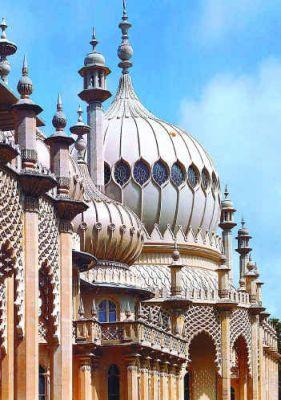
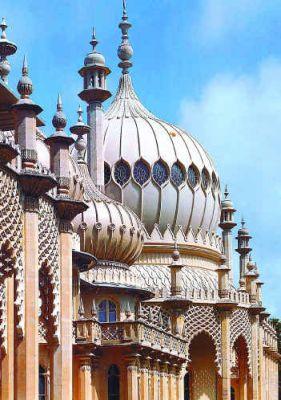
Royal Pavilion close up. Image @Tony Grant
The town grew in popularity after the Prince Regent made it his resort of choice. In 1822, five years after Jane Austen's death, a Chain Pier was erected. At 1,134 feet in length, with a promenade 13 feet wide, and with an admission fee of 2 pence (or subscription fee), one can imagine that visitors had ample opportunity to meet new friends and greet acquaintances along their leisurely stroll.
Chain Pier, 1836
Today,  Brighton looks vastly different.

Image @Tony Grant

Image @Tony Grant

Under Brighton Pier. Image @Tony Grant

Along Brighton Pier. Image @Tony Grant

Antique Centre. Image @Tony Grant
Looking out a window at Brighton Pier. Image @Tony Grant

Monday, June 25

Brighton: A Popular Seaside Resort

During Jane Austen's time, Brighton, a town along the south Sussex Coast and seen above in a John Constable painting, was the popular resort destination. Bath's desirability had plummeted among the Ton, as it had gained the reputation of being a stodgy tourist attraction for the elderly and infirm. By the time the Prince Regent's fashionable set frequented Brighton, it had grown from a sleepy seaside village of 3,000 in 1769 to a booming tourist town of 18,000 by 1817-1818.

The lengthening of the formal season helped in establishing Brighton as a holiday destination. By 1804 the season started late July and lasted until after Christmas, and by 1818 it had been extended until March. Visitors of note were always mentioned in Brighton's newspaper, and there were a host of them. (Illustration below is of Fashionables in Brighton, 1826)


The first notables were both members of the Royal Family, the Duke of Gloucester in 1765, and then the Duke of York in 1766. From 1771 the Duke and Duchess of Cumberland were regular visitors and the town's popularity with his uncles might have been one reason why the Prince of Wales came in 1783 and why he stayed for eleven days.

The Prince of Wales, after he became Prince Regent, began to spend enormous sums of money refurbishing Brighton Pavillion to his own fanciful specifications. Click here for my post on this beautiful palace.

In the early 18th century visitors were left to their own devices to find entertainments, but by 1810 guide books pointed out sites of interests in surrounding villages, amusements to be had, and picturesque walks. The sea was also used for entertainments such as yacht races and water parties which were watched from the shelter of the Steine. Military manoevres on the Steine and the Downs were popular.


Read more about Brighton here:


Quotes: Georgian Brighton, 1740-1820, Sue Farrant, University of Sussex Occasional Paper No. 13

Saturday, December 2

Brighton Pavilion


In Xanadu did Kubla Khan
A stately pleasure-dome decree :
Where Alph, the sacred river, ran
Through caverns measureless to man

Down to a sunless sea.

So twice five miles of fertile ground
With walls and towers were girdled round :
And there were gardens bright with sinuous rills,
Where blossomed many an incense-bearing tree ;
And here were forests ancient as the hills,
Enfolding sunny spots of greenery.
--Samuel Taylor Coleridge
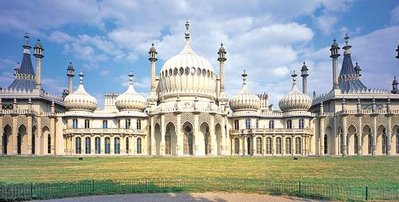


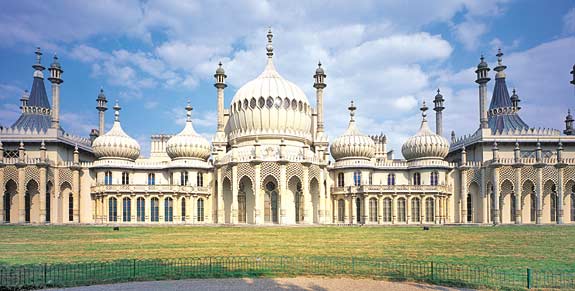
When I visited Brighton Pavilion in Brighton, a charming seaside town in Sussex's South Downs, I found it more beautiful and fantastic than the drawings, paintings, and photos I'd seen. The building, rebuilt between 1815-1822 by John Nash, the Prince Regent's architect, is starkly white and stands in the center of town. Approaching it on foot, one is astounded by the intricacy of the architectural details, from the exterior domes, spires, and columns, to the interior with its gothic touches, fantasy rooms, and exquisite color combinations and patterns.

The Prince Regent was known for his excesses and expensive tastes, and his architect John Nash succeeded in fulfilling the Prince’s most outrageous wishes. The Gothic Revival was in full swing during the Regency Era, including the love for all things mid-Eastern, Chinoise, and Arabian. This Arabian Nights fantasy in stone has been well documented in picture books and on the web. I will merely point out a few spectacular rooms and some of the details that struck me as being particularly beautiful or unusual.

The kitchen, a cavernous room created to comfortably accommodate the Prince's idea of an intimate dinner, is depicted on this web page. Click here and scroll down to the kitchen. You can also see a panoramic view of the kitchen on the page if you have a real player. It was not unusual for the Prince to throw a banquet with 36 courses, hence the kitchen was designed to accommodate the scores of cooks and enormous amounts of food stuffs and ingredients required to prepare these foods.

The long gallery is indeed long. The colors are riotous, and one feels as if one is traipsing through a fantasy land.


On the left is a picture of John Nash's long gallery. On the right is a photograph of the long gallery today.

The banquet room also lingers in my memory, with its long, long banqueting table, the exquisite details in the ceiling, and the fantastic carved dragons peeping out from chandeliers disquised as palms.


Salon & Music Room
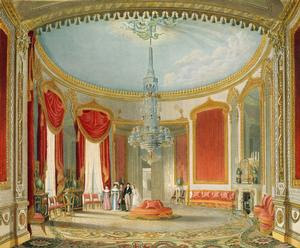


Images of Brighton in the 19th Century:
Evening Gathering at Brighton Pavilion in the Yellow Room


Brighton, a seaside resort